
New Zealand apple postharvest
Planning the next apple packhouse run
Growth Mindset developed a planning application for a New Zealand apple packhouse. It combined current production records, daily plans, priority changes and historical run performance, then used fruit forecasting and optimisation to help controllers prepare the next production run.
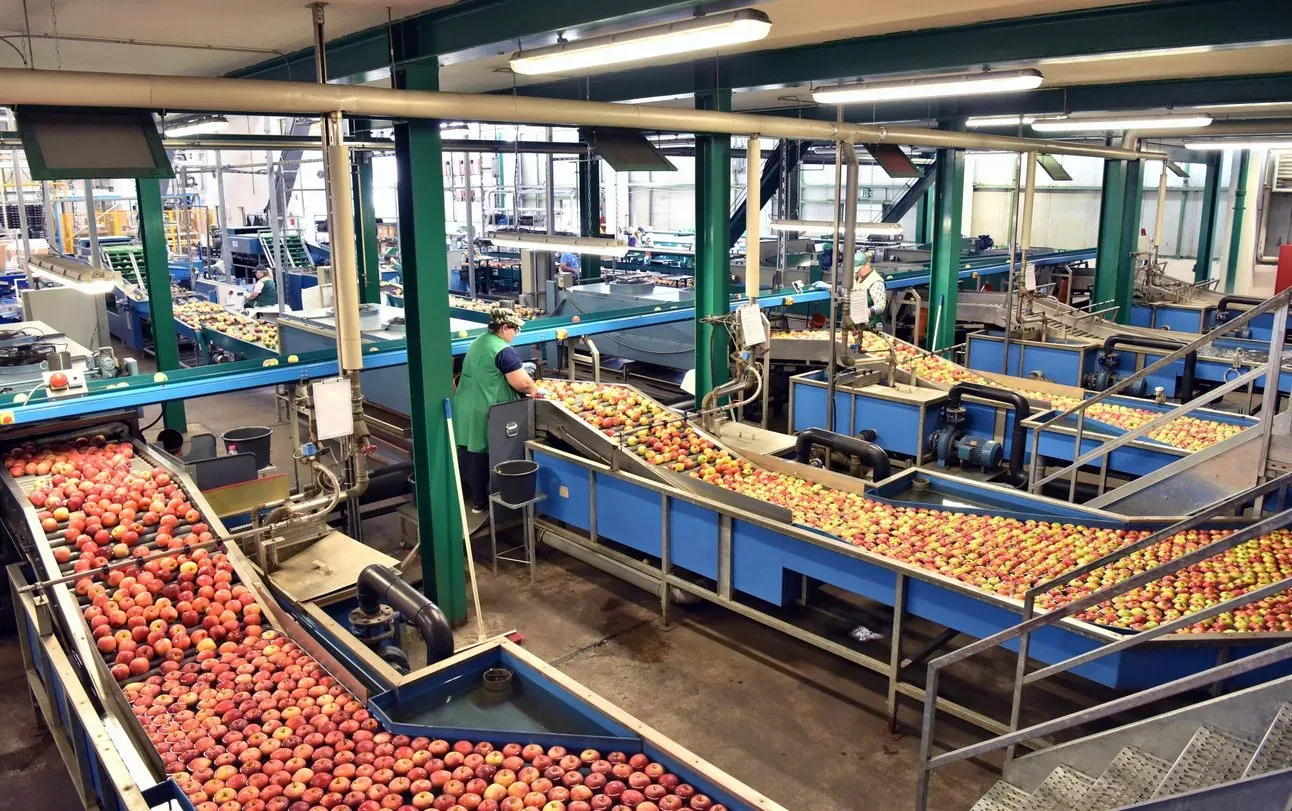
The next run was being planned from several partial views
Current production was visible in the operating systems, but the next-run decision depended on more than current production. Controllers also had to interpret the latest plan, changing product and market priorities, fruit history and the practical limits of the available packing equipment.
Those inputs sat in databases, shared files, reports and operating conversations. By the time the grader produced a live view of the incoming fruit, much of the next setup had already been decided. The point of a dedicated planning tool was not to display more data. It was to bring the relevant information together early enough to shape the next run.
One working view for production and planning
The application brought live carton and label production, fruit volumes, run performance, grower summaries and current planning information into the same interface. Controllers could compare what the line was producing with what the plan now required, without rebuilding the picture from separate reports.
Priority changes remained visible throughout the day. That mattered because target products, markets and run sequence could change while production was already under way.
A pre-run forecast of fruit mix, rate and volume
Historical carton and fruit data were used to estimate the likely size distribution, class split and grade split for the upcoming run. The model also estimated fruit per minute, cartons per minute and total production volume.
The forecast was used as a planning estimate rather than a promise of precision. Its value was that it gave controllers a defensible view before fruit reached the grader, when changes to equipment and product setup were still practical.
Optimisation turned the forecast into a workable line setup
The expected run was evaluated against product targets, packing rates, available capacity and equipment eligibility. The model also accounted for material changes, pack types, tray setup, size and class restrictions and other practical constraints.
It then recommended how work should be assigned across the available packing options and equipment groups. Controllers could review the assumptions, adjust the plan and save the setup before production began.
Production history became part of the next decision
The application moved useful information forward in the planning cycle. Controllers could review the expected run mix, production rates, volume and equipment requirements before the line was committed.
Priority changes remained part of the same working view, and equipment assignments followed a consistent set of operating rules rather than being reconstructed from scratch for each run.